Dice🎲
A broad, foundational category of games driven purely by the probabilistic outcomes of rolling numbered cubes.
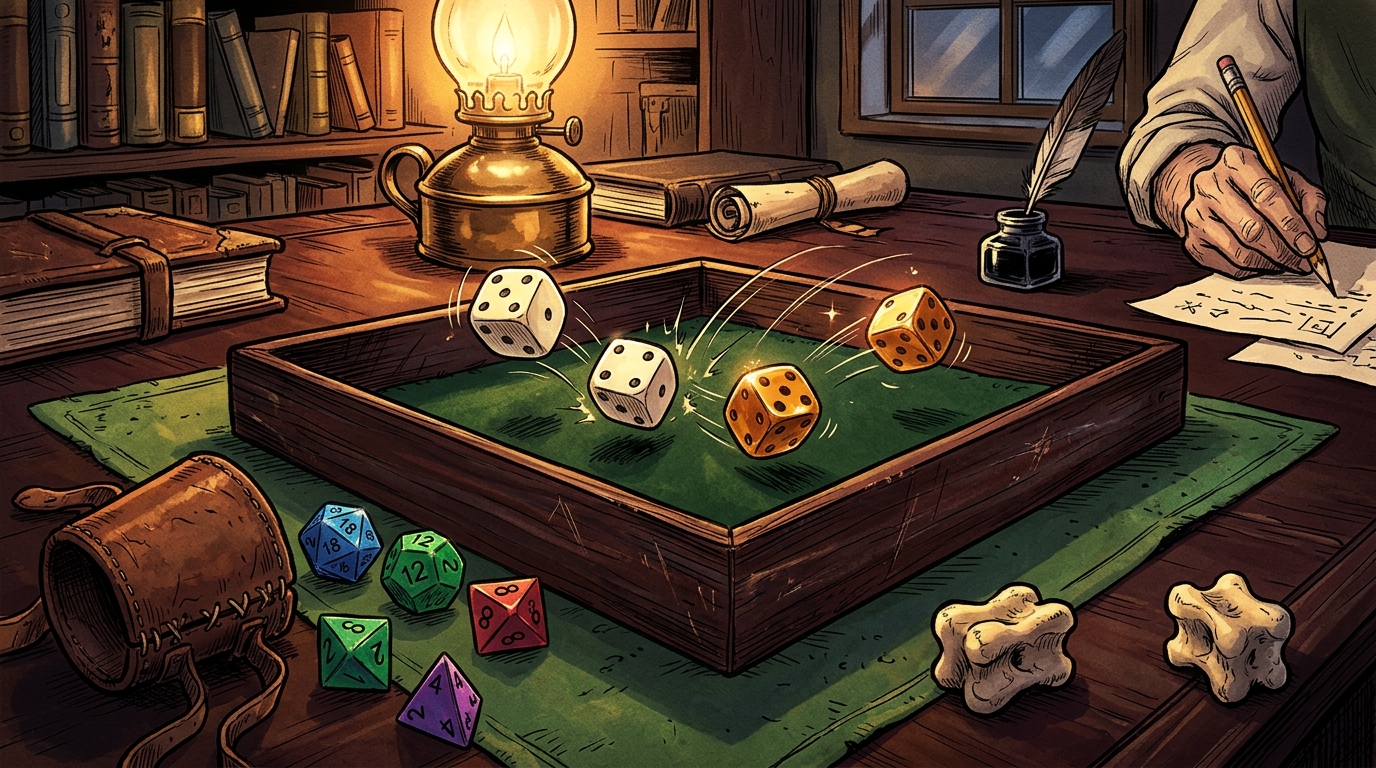
Core Concept: A broad, foundational category of games driven purely by the probabilistic outcomes of rolling numbered cubes.
Counting the Odds
Every roll has a fixed list of possible outcomes. With one fair die, each number is equally likely, but when adding two or more dice together, middle totals like 7 show up far more often than 2 or 12 because there are more ways to roll them.
Risk vs. Average Reward
Smart dice play compares what you expect to gain on your next roll against what you stand to lose. Once your unbanked turn points grow large, a single bad roll costs more than an extra roll is worth on average.
Playing the Scoreboard
Fixed rules like “always stop at 20” fail because they ignore the score. Play safely when you are ahead, and take bigger risks when your opponent is close to winning.
Custom Dice Simulator🎲
Mix multiple die types in a single roll (1–100 dice)